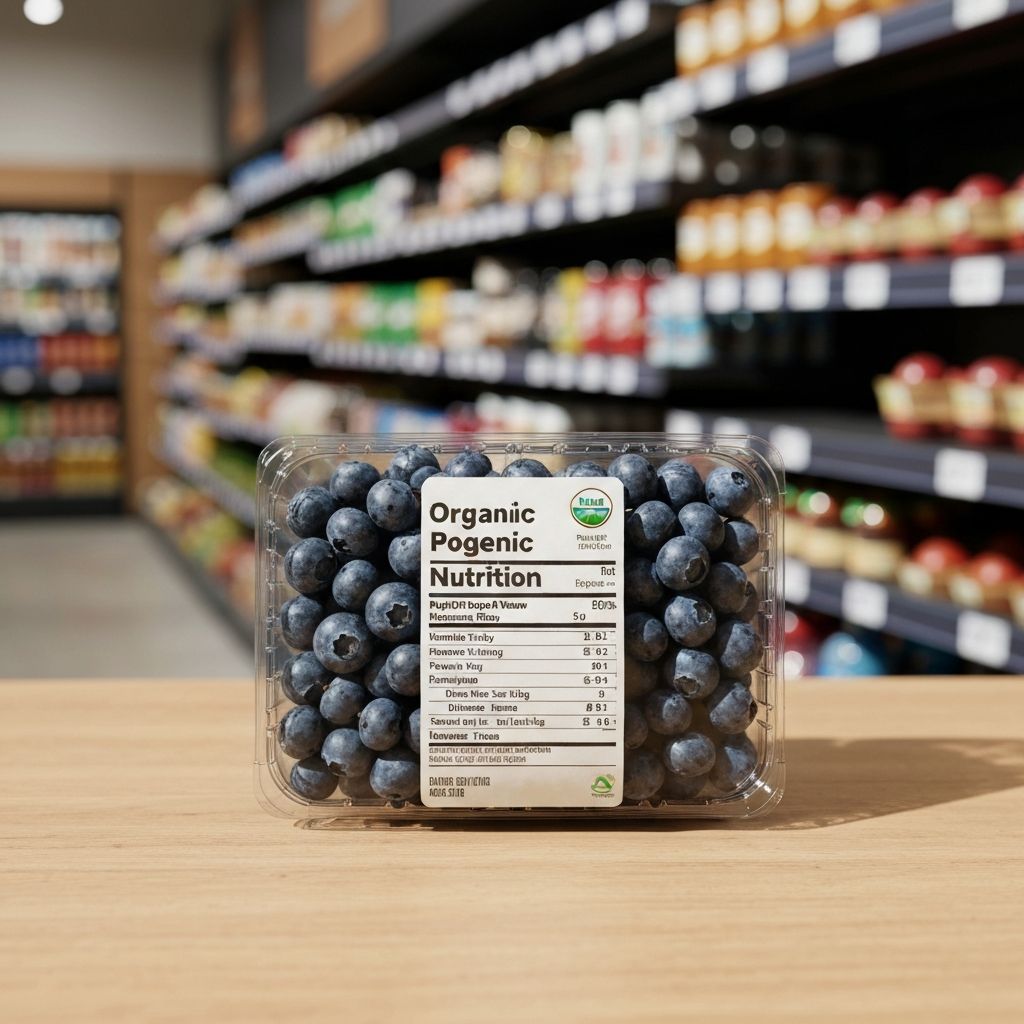
How nutritional information on packaging influences consumer perception and selection patterns in retail environments
Published: February 2026
Food packaging in retail settings provides consumers with various forms of information, from mandatory nutritional facts to voluntary health claims and front-of-pack labelling schemes. Research in consumer psychology and nutrition science examines how this information affects perception of food quality, healthfulness, and ultimately, purchasing decisions.
Studies demonstrate that the presence and format of nutritional information can significantly influence product evaluation, even when consumers do not consciously process all details. This effect operates through multiple mechanisms, including heuristic processing, attribute highlighting, and perceived transparency.
When encountering food labels, consumers engage in varying levels of cognitive processing depending on factors such as time availability, motivation, prior knowledge, and label complexity. Some individuals conduct detailed comparisons of macronutrient profiles, while others rely on simplified indicators like traffic light systems or health logos.
Research using eye-tracking technology reveals that most consumers spend only seconds examining labels, focusing primarily on specific elements such as calorie counts, fat content, or health claims. This limited attention means that label design and information hierarchy significantly impact what information gets processed.
Nutritional labelling affects not only nutritional assessment but also perceived taste, quality, and value. Experimental studies show that identical products presented with different nutritional information receive different sensory ratings, suggesting that label content influences expectations that then shape actual eating experiences.
Products marketed with health-oriented labels may be perceived as less tasty or satisfying, a phenomenon termed the "unhealthy equals tasty intuition." Conversely, organic or natural labels can enhance perceived quality and flavour, independent of actual product differences.
While label reading theoretically enables informed decision-making, its practical impact on purchasing varies widely. Some studies find modest effects of improved labelling on healthier selections, while others document minimal behaviour change despite increased awareness.
Factors mediating label effectiveness include nutritional literacy, price considerations, taste preferences, habitual buying patterns, and time pressure during shopping. In real-world retail environments, multiple influences compete with nutritional information for decision-making priority.
Not all consumers engage with food labels equally. Research identifies distinct consumer segments: frequent label readers who actively compare products, occasional readers who check labels for specific concerns, and non-readers who rarely consult nutritional information.
Demographics, health status, dietary restrictions, and nutritional knowledge correlate with label use patterns. Individuals managing chronic conditions or following specific dietary approaches tend to exhibit more consistent label reading behaviour.
Much research on food labelling occurs in controlled experimental settings or uses self-reported data, which may not fully capture real shopping behaviour. The gap between stated intentions to use labels and actual behaviour in busy retail contexts represents an ongoing research challenge.
Additionally, labels provide information but cannot account for individual metabolic differences, activity levels, overall dietary patterns, or personal goals. The same nutritional profile may suit one person's needs while being less appropriate for another.
This article explains research on food labelling and consumer behaviour. It does not advise what labels to read or how to use nutritional information for personal decisions.
Individual dietary needs vary based on numerous factors. Decisions about food selection should consider personal circumstances and, when needed, guidance from qualified nutrition or healthcare professionals.