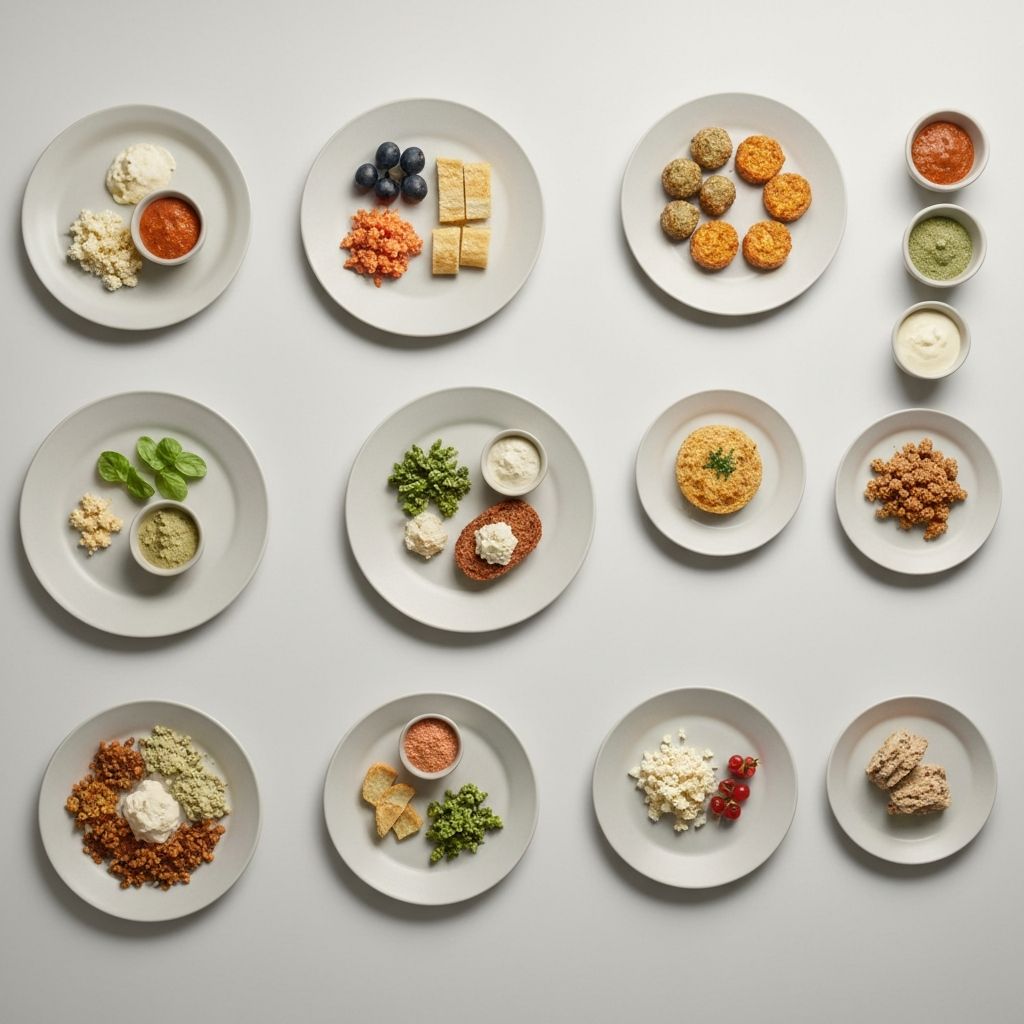
How visual cues, plate dimensions, and serving contexts affect estimates of appropriate portion sizes
Published: February 2026
Determining appropriate food portions involves complex perceptual and cognitive processes influenced by numerous contextual factors. Research demonstrates that humans have limited accuracy in estimating food quantities and that these estimates are systematically biased by environmental presentation variables.
Unlike physiological hunger and satiety, which operate through internal bodily signals, portion size decisions often rely on external cues including container size, social norms, visual comparisons, and learned habits about what constitutes a typical serving.
A substantial body of research examines how plate and bowl dimensions affect portion selection and consumption. Studies generally find that larger dishware leads to larger servings and increased intake, an effect attributed to visual contrast principles known as the Delboeuf illusion.
When food occupies a smaller proportion of a large plate, it appears subjectively smaller than the same quantity on a smaller plate where it fills more visual space. This perceptual phenomenon can influence both serving decisions and satisfaction judgments, though individual responses vary.
Food packaging size significantly affects consumption, with research documenting that larger packages promote increased intake even when individuals could access additional food if desired. This effect operates partly through establishing consumption norms: what comes in a package is perceived as an appropriate single-serving amount.
Pre-portioned packaging can reduce this effect by providing clear quantity boundaries, though it does not eliminate individual variation in actual consumption needs or preferences.
Beyond container dimensions, food properties themselves influence portion perception. Energy-dense foods may be under-portioned when individuals rely on volume cues, as smaller physical volumes of high-calorie foods provide substantial energy. Conversely, low-energy-density foods like vegetables may require larger visual volumes to provide equivalent calories.
Food shape, colour contrast with plates, and arrangement also affect portion perception, with research suggesting that elongated shapes may be perceived differently than compact forms of equivalent weight.
Portion size norms vary considerably across cultures and social contexts. Restaurant servings, household traditions, and regional customs establish expectations about typical quantities that influence individual portion decisions beyond physiological needs.
Social eating situations add complexity, with research documenting that individuals adjust consumption based on dining companions' intake, group size, and social relationship dynamics, often overriding personal portion preferences.
Historical increases in typical portion sizes, particularly in commercial food settings, have led to discussion of "portion distortion" where contemporary servings exceed past norms. Research suggests repeated exposure to larger portions recalibrates perceptions of what constitutes normal amounts.
Interventions aimed at improving portion awareness through education or tools like measuring devices show mixed effectiveness, with knowledge not consistently translating to behaviour change in everyday eating contexts.
This article explains research on portion size perception and environmental influences. It does not prescribe specific portion sizes or provide recommendations about quantities to consume.
Individual nutritional needs vary based on numerous factors. Decisions about food quantities should consider personal circumstances and, when appropriate, guidance from qualified professionals.