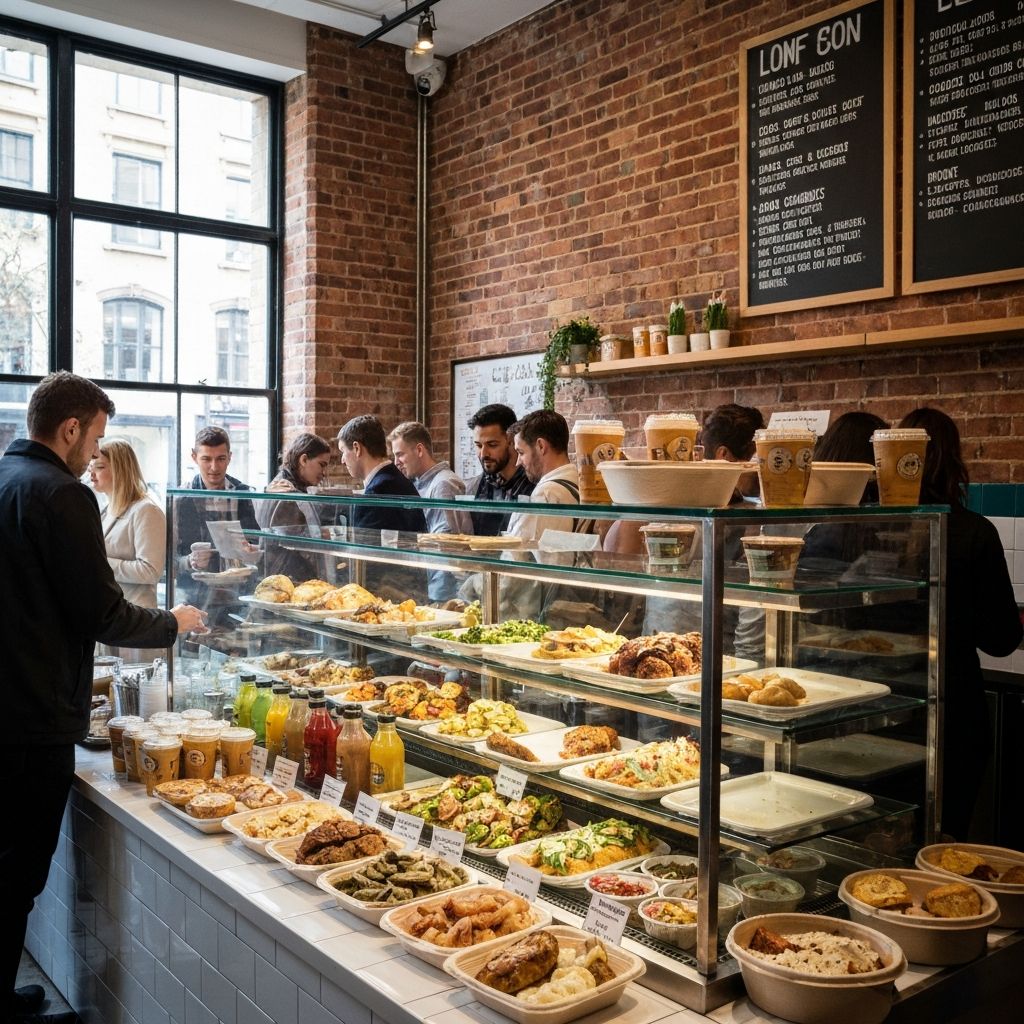
Examination of how food environment design in cities influences habitual selection patterns
Published: February 2026
In behavioural economics and psychology, default options are pre-selected choices that require no active decision to accept. Research demonstrates that defaults powerfully influence behaviour across domains because most people follow the path of least resistance, accepting presented options rather than actively selecting alternatives.
In food contexts, defaults manifest through various mechanisms: the most prominent menu items, grab-and-go convenience placements, standard meal components, and automatic side selections. Urban food environments contain numerous default structures that shape daily eating patterns often without conscious awareness.
Cities like London present complex food landscapes characterised by high density of food outlets, diverse cuisine availability, and multiple channels for food acquisition including restaurants, cafes, street vendors, supermarkets, and delivery services. The physical and informational architecture of these environments establishes default pathways for food selection.
Proximity and visibility strongly predict food choices. Outlets along commute routes, near workplaces, or in high-traffic areas become default options through sheer convenience and repeated exposure, even when other options might better match preferences if considered deliberately.
Time pressure characterises modern urban life, making convenience a dominant factor in food decisions. Pre-prepared foods, fast-casual restaurants, and delivery platforms reduce decision-making effort and preparation time, becoming default choices for busy individuals.
Research shows that when cognitive resources are depleted by work demands or decision fatigue, individuals increasingly rely on habitual choices and convenient defaults rather than engaging in deliberative food selection based on nutritional considerations or varied preferences.
Restaurant and cafe menu structures create default selections through visual hierarchy, item placement, category organisation, and default combinations. Featured items, combo meals, and suggested pairings guide choices toward specific options while requiring active effort to deviate.
Studies of menu psychology reveal that most diners select from a limited set of prominent options rather than considering full menu ranges. First items in categories, visually highlighted selections, and servers recommendations disproportionately influence final choices.
Food delivery applications and digital ordering systems introduce new default mechanisms through personalised recommendations, previous order suggestions, and algorithmic rankings. These systems create individualised default pathways based on past behaviour, potentially reinforcing existing patterns rather than encouraging exploration.
The convenience and friction reduction of repeat ordering functions make previously selected meals de facto defaults, reducing decision effort but also potentially limiting dietary variety over time.
Understanding default influences provides context for why habitual food patterns form and persist even when individuals express intentions to vary choices or select differently. Environmental structures often exert stronger influence on behaviour than conscious preferences or knowledge.
However, defaults are not deterministic. Individuals can and do override default options, particularly when motivated by specific goals, dietary requirements, or when defaults fail to satisfy preferences. The influence of defaults represents a probabilistic tendency rather than absolute control.
Recognising environmental influences on food choice does not eliminate personal responsibility or agency. Rather, it contextualises decision-making within the physical and social structures that shape available options and their relative accessibility.
Different individuals show varying degrees of susceptibility to default influences based on factors including decision-making style, nutritional knowledge, time availability, and strength of food preferences.
This article explains research on food environment influences and default choices. It does not prescribe how to navigate food environments or recommend specific selection strategies.
Individual food choices involve numerous personal factors beyond environmental defaults. Decisions should consider individual circumstances, preferences, and when appropriate, guidance from qualified professionals.